

What a Body Wash Actually Does to Your Skin And Why Most People Are Using the Wrong One
You step out of the shower feeling clean. Maybe even a little refreshed. But by the time you've dried off, your skin feels tight, or dry, or weirdly rough - and you assume that's just how your skin is. It's not. In most cases, the best body wash for your skin type is doing a lot more than just washing away sweat and grime. And if yours isn't chosen carefully, it could be quietly working against your skin every single day. Understanding what actually happens when you lather up is the first step to making a choice that genuinely serves your skin.
The Real Job of a Body Wash: More Than Just Cleansing
Most people think of a body wash as a cleaning product. And yes - cleansing is the primary function. But the best body wash does something far more nuanced. It interacts with your skin barrier, your microbiome, and your skin's natural oils all at once. Every time you wash, you're not just removing dirt. You're also affecting how much moisture your skin can retain afterward, how balanced your skin's surface environment is, and whether your skin feels calm or reactive once you step out.
The outer layer of your skin - the stratum corneum - is a tightly packed structure of skin cells and lipids (fats) that acts like a protective seal. A good body wash cleanses the surface without stripping these lipids. A poor one, even if it smells incredible, can disrupt this barrier repeatedly over time, making your skin drier, more sensitive, and more prone to irritation.

Why pH Balance Matters More Than You Think
Your skin's surface sits at a naturally acidic pH - somewhere between 4.5 and 5.5. This acidity isn't a flaw; it's protective. It keeps harmful bacteria in check, supports your skin's natural enzyme activity, and helps the barrier function properly.
Here's the problem: many conventional body washes are formulated at a much higher pH - sometimes as high as 9 or 10 - because alkaline formulas foam more aggressively and feel "cleaner" to use. But that surge in pH, repeated daily, throws your skin's acid mantle off balance. The result? Your skin struggles to regulate moisture, becomes more vulnerable to bacteria, and often feels dry or tight immediately after washing.
A pH balanced body wash is one that's formulated close to your skin's natural range. It cleanses effectively without disrupting the acid mantle, meaning your skin can get back to its normal function much faster after every wash. If your current body wash leaves your skin feeling squeaky clean but visibly dry, pH imbalance is likely the culprit.
What Happens to Moisture During a Shower
Hot water feels luxurious - but it's one of the biggest contributors to post-shower skin dryness. Warm to hot water opens the pores and temporarily softens the lipid layer of your skin, making it easier for moisture to escape. When you combine hot water with a harsh surfactant (the cleansing agent in your body wash), the stripping effect is compounded.
A moisturizing body wash works differently. It contains humectants like glycerin or hyaluronic acid that attract water to the skin, emollients that smooth and soften, and sometimes occlusives that help seal moisture in. These ingredients don't just sit on top of your skin - they actively support hydration during and after rinsing. The goal isn't to moisturise on top of clean skin later; a truly good body wash starts the hydration process in the shower itself.
Surfactants: The Ingredient Most People Never Look At
The surfactant in your body wash is what creates the lather and lifts away oil and grime. But not all surfactants are equal. Sulphates - particularly Sodium Lauryl Sulphate (SLS) - are among the most common and also among the most aggressive. They're efficient cleaners, but they're non-selective: they strip away dirt and your skin's natural oils with equal enthusiasm.
Gentler alternatives - like sodium cocoyl isethionate (derived from coconut), decyl glucoside, or coco-betaine - clean effectively while respecting the skin barrier. These are typically found in formulas that market themselves as "gentle" or "skin-kind," but the real way to verify is to check the ingredients list. The further down a harsh surfactant appears, the less concentrated it is. If SLS is in the first three ingredients, that's a telling sign.

Fragrance, Botanicals, and What's Actually Doing the Work
Fragrance is one of the biggest reasons people choose a body wash - and one of the most underexamined. Synthetic fragrances can be significant irritants, especially for sensitive skin. They can trigger contact dermatitis, disrupt the skin barrier, and cause long-term sensitisation even in people who don't consider themselves reactive.
Natural botanicals and plant-derived scent sources are a different story. Ingredients like Oud - a resinous wood extract long used in Ayurvedic and Middle Eastern traditions - bring both fragrance and functional benefit. Oud has antioxidant properties and works as a soothing agent on the skin, meaning the scent isn't just aesthetic; it's part of the formulation's benefit. This is the kind of integration that separates a thoughtfully made body wash from one that's simply perfumed.
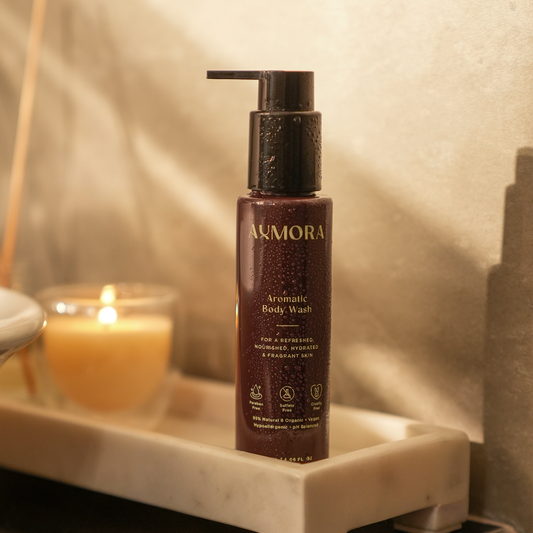
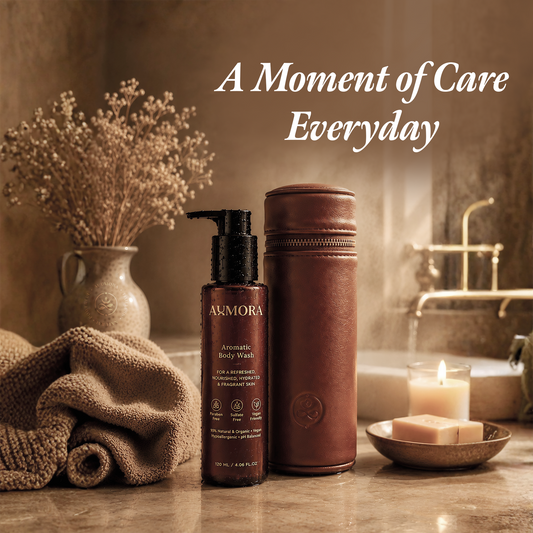
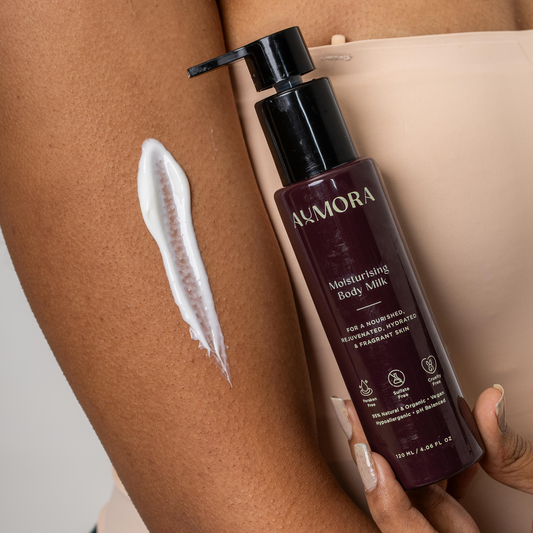
Auumora's Oudh Radiance Ritual Body Wash is a good example of this philosophy - it's built around Oud as a core ingredient, blending antioxidant protection with botanical soothing agents to leave skin calm, nourished, and genuinely fragrant rather than just scented. It's the kind of formulation that makes sense once you understand what a body wash is actually supposed to do.
Signs You Might Be Using the Wrong Body Wash
Most people never connect their skin concerns back to their body wash. But these are reliable signals:
Your skin feels tight or dry within minutes of stepping out of the shower. Your skin itches or feels irritated on the torso, back, or limbs - areas that don't get much attention in a typical skincare routine. You need to apply a heavy moisturiser immediately after showering just to feel comfortable. Your skin looks dull or rough even though you shower daily. You've noticed increased sensitivity or redness over time without changing anything else in your routine.
Any one of these is worth paying attention to. All of them together suggest your body wash is doing more harm than good.
How to Choose the Best Body Wash for Your Skin
There's no single formula that works for everyone, but there are non-negotiable markers of quality. Look for a pH balanced body wash that sits close to your skin's natural acidity. Prioritise gentle, non-sulphate surfactants. Look for active humectants and emollients in the formula. Avoid synthetic fragrance where possible, and favour products where botanicals are doing functional work rather than just marketing work.
If your skin is dry or sensitive, a moisturising body wash with ingredients like shea, glycerin, or plant oils will make a visible difference. If you're prone to reactions, a hypoallergenic formula without unnecessary additives is the safer route. And regardless of skin type, a product that's vegan, cruelty-free, and dermatologically validated gives you reasonable confidence that what's on the label reflects what's inside.
The best body wash isn't the one with the most luxurious lather or the strongest scent - it's the one that leaves your skin better than it found it.
Final Thought:
You use your body wash every day. That makes it one of the highest-frequency skincare choices you make - and yet most people spend less time choosing it than they do choosing a face wash. The skin on your body deserves the same consideration. It has the same barrier to protect, the same pH to maintain, and the same need for nourishment.
Once you understand what a body wash is genuinely doing at a skin level, the choice becomes less about which one smells the best and more about which one actually works. That shift in thinking is where better skin - all over - begins.
Tags:
Previous
Your Skin Has a Barrier - Here's How Summer Is Slowly Breaking It Down
Next
Why You Smell Good Right After a Shower But Not 2 Hours Later - The Real Reason
Related articles






Benefits of Hyaluronic Acid for Face and Body
May 19 2026